





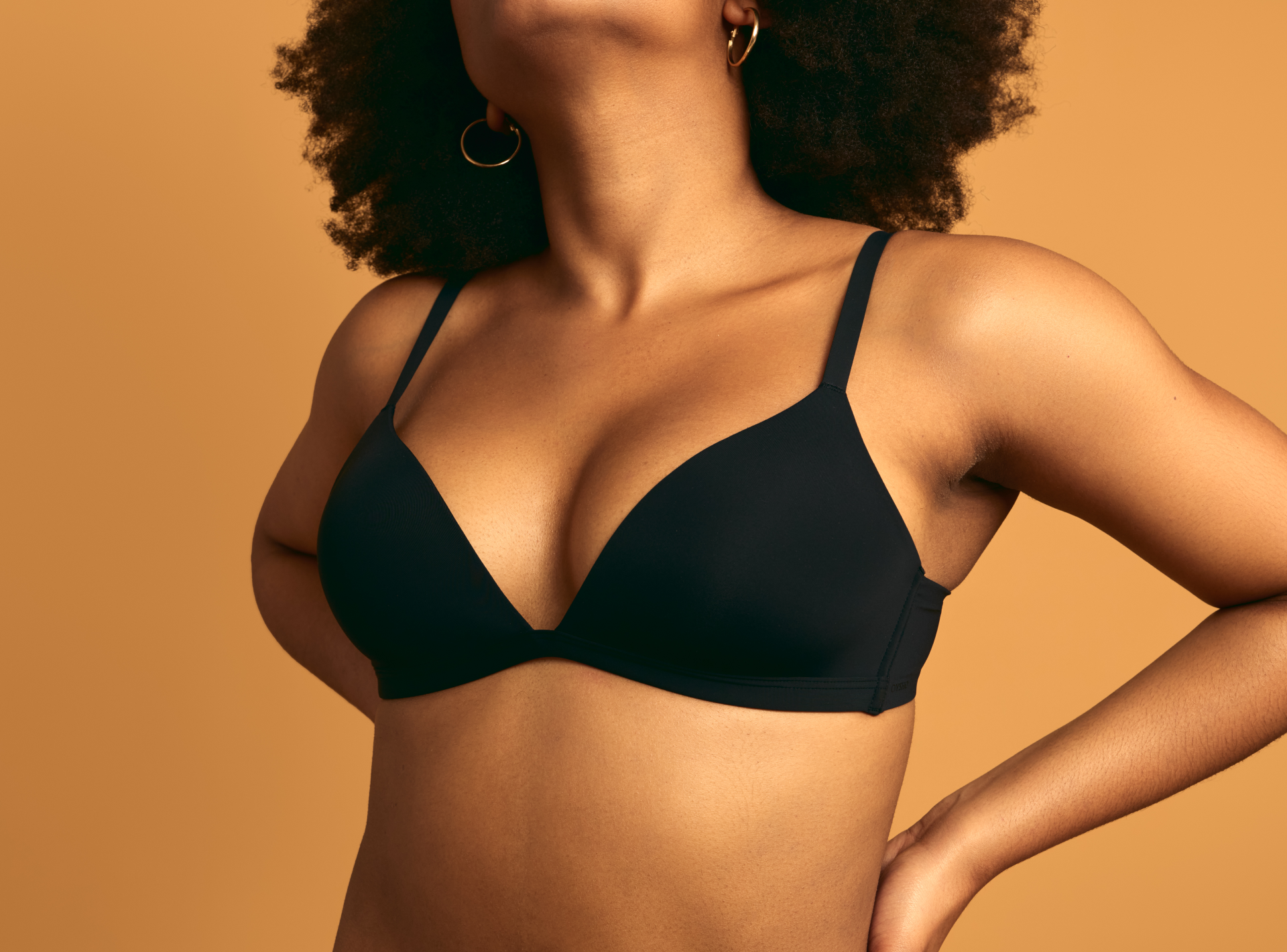
Even though breast augmentation usually has great results and a satisfaction rate of over 91%, there can be problems and less than ideal results. One of the less common problems that can happen is when the breasts are so close together that they look like they are one unit. In layman’s terms, this is called symmastia (or synmastia), or a uniboob.
What causes this condition called symmastia? This is usually what happens when you try to bring the breasts closer together to get better cleavage. The pockets for the implants are cut too far toward the middle, which keeps the skin and underlying tissue from sticking to the sternum. The skin then hangs over the breast implants without being directly attached to the sternum, which makes this shapeless “uniboob.” The situation gets even worse when the implants are too big or too small for the woman’s body. Symmastia can happen when breast implants are put in front of or behind the pectoralis major (chest wall) muscle.
Women who are very thin and those who have a chest wall deformity called pectus excavatum (where the sternum looks like it has caved in) are both at a slightly higher risk of this deformity happening. In these cases, being very careful when cutting and not using breast implants that are too big can help stop symmastia from happening.
Several methods have been used to deal with this difficult deformity. A newer method that uses specially processed tissue (Alloderm® and Strattice®) has the potential to give results that are more predictable, satisfactory, and long-lasting.
Breast Augmentation In Dubai
Breast Augmentation in Dubai is a popular cosmetic procedure known for producing natural-looking and confidence-boosting results; however, like any surgery, it has some rare complications, one of which is symmastia, also known as “uniboob.” Symmastia is an uncommon outcome in which the breast implants migrate toward the center of the chest, reducing or eliminating the natural separation between the breasts, resulting in a merged appearance. This condition can result from over-dissection of the implant pocket, the use of excessively large implants, or naturally thin tissue in the chest area that cannot adequately support the implants. While it is uncommon, understanding symmastia is critical for patients considering breast augmentation so that they can make informed decisions and select an experienced surgeon. Prevention is essential, and skilled surgeons carefully plan implant size, placement, and surgical technique to ensure a natural cleavage and proper spacing between the breasts. In reputable clinics like Perfect Doctors Clinic, specialists like Dr. Perfect Celebrity use cutting-edge techniques to reduce risks and achieve balanced, aesthetically pleasing results. If symmastia develops, corrective surgery is available, which may include reconstructing the implant pocket, reinforcing the tissue, or adjusting implant size and position to restore normal breast separation. Early diagnosis and appropriate management are critical for successful correction. Despite this uncommon complication, breast augmentation remains a safe and effective procedure when performed by a qualified professional, with the majority of patients reporting highly satisfactory outcomes. Patients in Dubai can significantly reduce the risk of complications such as symmastia by selecting an expert surgeon and adhering to proper pre- and post-operative instructions.
What Is Symmastia (Uniboob)?
Symmastia occurs when breast implants cross the midline of the chest, removing the natural cleavage and making the breasts appear joined together. This can occur immediately following surgery or gradually over time. In a standard breast augmentation, each implant is placed in a carefully designed pocket with a defined boundary along the sternum. However, when these boundaries are breached, the implants can migrate inward, resulting in symmastia. The severity of the condition varies, from mild loss of separation to a more pronounced “uniboob” appearance. Patients may notice changes in cleavage, unusual fullness in the center of the chest, or implants that move abnormally when lying down. Although symmastia is generally not harmful to one’s physical health, it can have a significant impact on aesthetic results and patient satisfaction, necessitating corrective measures to restore a natural breast contour.
BOOK AN APPOINTMENT TODAY
Causes And Risk Factors Of Symmastia
Several factors can influence the development of symmastia after breast augmentation. One of the primary causes is over-dissection of the implant pocket during surgery, which involves releasing too much tissue near the center of the chest, allowing implants to drift inward. Choosing implants that are too large for the patient’s anatomy can also put undue strain on the chest tissues, increasing the risk of displacement. Furthermore, patients with naturally thin skin or weak connective tissue may be more vulnerable to this complication because their tissues do not provide adequate support for the implants. Incorrect implant placement or failure to maintain proper surgical boundaries can exacerbate the risk. Post-operative factors such as failure to wear recommended support garments or excessive early movement can also contribute to implant migration. Understanding these risk factors emphasizes the importance of proper planning and technique in avoiding symmastia.
Prevention Through Proper Surgical Technique
Symmastia can be prevented with careful surgical planning and technique. Before deciding on the optimal implant size and type, experienced surgeons consider the patient’s anatomy, chest width, tissue thickness, and aesthetic goals. Maintaining a safe distance between the implant pockets is essential for preserving natural cleavage and preventing inward migration. During surgery, surgeons employ meticulous dissection techniques to create well-defined implant pockets that aid in proper positioning. Furthermore, selecting implants that are proportionate to the patient’s anatomy reduces stress on the surrounding tissues. Post-operative care is also important in prevention; patients are often advised to wear supportive garments or specialized bras to help keep the implant in place during the healing process. Combining expertise, advanced techniques, and proper aftercare can significantly reduce the risk of symmastia, ensuring the best possible outcomes for breast augmentation patients.
Treatment And Correction Of Symmastia
If symmastia develops, corrective surgery is usually required to restore the normal separation between the breasts. The severity of the condition determines the treatment approach, which may include reconstructing the implant pockets, reinforcing the tissue along the midline, or adjusting the size and position of the implants. Surgeons may use internal sutures or specialized materials to create a clear boundary between the breasts and prevent further migration. In some cases, smaller implants may be suggested to relieve pressure on the chest tissues and improve long-term stability. Corrective surgery recovery is similar to the initial procedure, with patients required to adhere to strict postoperative guidelines to ensure proper healing. Although correction can be difficult, skilled surgeons can produce excellent results that restore a natural appearance and increase patient satisfaction. Early intervention frequently results in better outcomes, emphasizing the importance of prompt consultation if concerns arise.
You can call my clinic to learn more about symmastia, breast implants, breast augmentation, or any other cosmetic surgery. You can also set up a consultation.
MEET THE EXPERT DOCTOR
Best Plastic Surgeon In Dubai For Breast Augmentation
Best Plastic Surgeon in Dubai for breast augmentation is available at the Perfect Doctors Clinic, where Dr. Perfect Celebrity is wel-known for providing safe, natural-looking, and well-balanced results. While breast augmentation is usually a very successful procedure, patients should be aware of rare complications like symmastia, also known as “uniboob.” This unusual condition occurs when the breast implants are too close together across the midline of the chest, reducing or eliminating the natural separation between the breasts. Symmastia can be caused by overly aggressive surgical pocket dissection, using implants that are too large for the patient’s anatomy, or having thin chest tissues that cannot support the implants. To reduce such risks, Perfect Doctors Clinic employs meticulous pre-operative planning and precise surgical techniques, which ensure proper implant positioning and natural cleavage. Dr. Perfect Celebrity evaluates each patient’s anatomy, skin elasticity, and desired outcome to determine the best implant size and placement, lowering the risk of complications. If symmastia develops, corrective procedures can be used to reconstruct the implant pocket and restore a natural breast contour. Patients are also given detailed post-operative care instructions, which include the use of supportive garments to help maintain implant positioning while healing. Patients can be confident that with expert care, advanced techniques, and a personalized approach, they will achieve beautiful and long-lasting results while minimizing potential risks. Breast augmentation, when done by a skilled surgeon, is a safe and effective procedure that improves both appearance and self-confidence.
Conclusion
Symmastia, or “uniboob,” is a rare but significant complication to consider when considering breast augmentation. While it can affect the aesthetic outcome by changing the natural separation between the breasts, it is largely avoidable with proper surgical planning, implant selection, and expert technique. Patients benefit from being informed about potential risks, which allows them to make better decisions and set realistic expectations. In the rare cases where symmastia occurs, effective corrective procedures can be used to restore natural contours and increase satisfaction. Finally, the success of breast augmentation depends on selecting a skilled surgeon, adhering to post-operative instructions, and maintaining open communication throughout the procedure. With modern advancements and experienced professionals, patients can confidently undergo breast augmentation with minimal risk and achieve beautiful, balanced, and long-term results.