





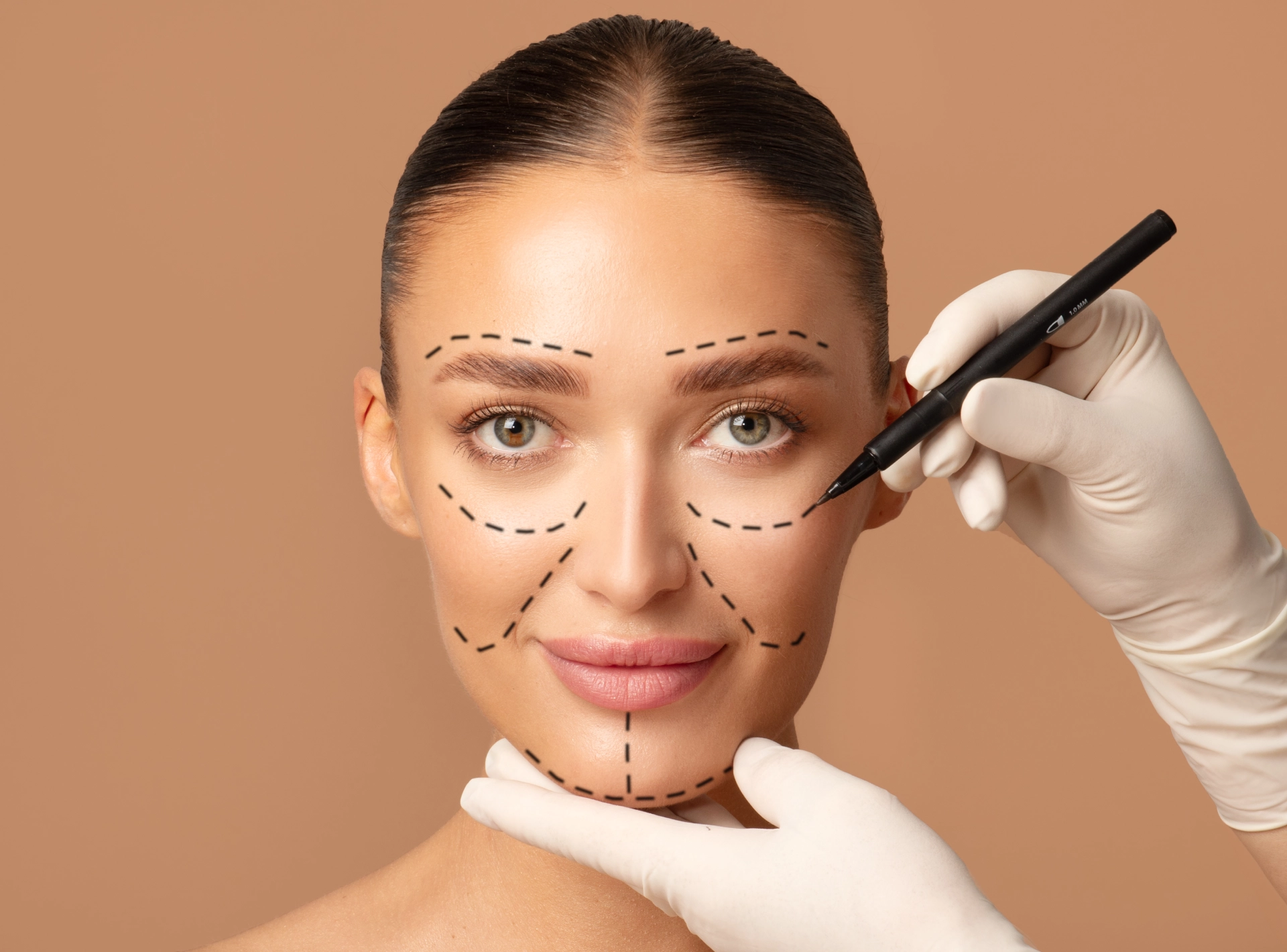
The best plastic surgery procedure for severe facial aging symptoms, such as severe wrinkles and skin sagging, is facelift surgery. Facelift procedures come in a wide variety, with varying degrees of invasiveness and outcomes.
Full Facelift In Dubai
Full Facelift in Dubai is a comprehensive surgical procedure that addresses more pronounced signs of facial aging in the midface, lower face, jawline, jowls, and, if necessary, the neck. It may entail the repositioning of deeper facial tissues and the removal of excess skin to establish a more youthful and smoother facial contour. A full facelift offers a more comprehensive rejuvenation for individuals with more significant sagging and tissue descent, in contrast to a mini facelift, which typically concentrates on limited areas and milder laxity. Dr. Perfect Celebrity evaluates the degree of laxity, facial anatomy, skin quality, and esthetic objectives at Perfect Doctors Clinic prior to suggesting an appropriate technique. The procedure is tailored to the specific requirements of each patient, rather than adhering to a predetermined methodology. A realistic expectation and proper consultation are essential when considering full facelift surgery, as the most suitable technique is contingent upon the desired outcomes and individual facial characteristics.
Mini Facelift In Dubai
Mini Facelift in Dubai is a less invasive facial rejuvenation procedure intended primarily for people who have early or mild signs of facial aging. It generally concentrates on the lower face, which encompasses the cheeks, jawline, and early jowls, while employing a more restricted surgical approach than a full facelift. This procedure has the potential to enhance mild skin laxity and produce a more defined, refreshed appearance without the extensive correction that is typically associated with a full facelift. Before suggesting an appropriate course of action, Dr. Perfect Celebrity assesses the patient’s desired outcomes, esthetic concerns, skin laxity, and facial structure at Perfect Doctors Clinic. A mini facelift is not universally appropriate due to the fact that each face ages differently. A professional consultation is necessary to ascertain whether this method can effectively address your concerns. Your individual needs, expectations, and overall suitability for surgery are all taken into account when the treatment plan is customized to support a balanced, natural-looking facial rejuvenation.
In this blog, we will compare two of the most common facelift procedures: the full facelift and the mini facelift.
Quick Comparison Table:
| Full Facelift | Mini Facelift | |
| Alternative Names | Rhytidectomy, Lower Facelift, and Conventional Facelift | Mini Lift, Weekend Lift |
| Invasiveness | Elevated | Moderate to Low |
| Anesthesia | Local anesthesia combined with sedation or general anesthesia | Local anesthesia with or without sedation |
| Time of Procedure | 2–3 hours | 50 to 80 minutes |
| Symptoms Handled | Aging from Moderate to Severe | Small Aging |
| Duration of Results | Ten to fifteen years | Two to six years |
| Cost | Ranges from AED 34,099 to AED 45,000 | Ranges from AED 24,999 to AED 50,000 |
| Downtime | Two to three weeks | One week |
BOOK AN APPOINTMENT TODAY
What Is A Full Facelift?
The main purpose of a complete facelift is to make corrections. Patients with moderate to advanced signs of aging are advised to use it. The full facelift, also referred to as a traditional facelift, treats sagging cheeks and the midface area in addition to the lower face, jowls, jawline, and occasionally the neck.
What Is A Mini Facelift?
Although the meaning of a mini facelift varies slightly among surgeons, it is generally considered a less invasive version of a full facelift. The mini facelift, which tightens skin and underlying muscle less forcefully than a full facelift, is primarily a preventative procedure. A mini facelift requires fewer or shorter incisions than a full facelift because it only treats the lower face.
Younger patients with mild to moderate signs of aging or those looking for a less invasive touch-up procedure after a facelift are the best candidates.
Technique Differences
Full Facelift: By surgically removing extra skin, tightening loose muscles, and re-draping the skin over the face and neck, a full facelift, also known as a traditional facelift, makes the face smoother and tighter. A surgical incision is made around the ears and extends into the hairline in front and behind the ears as the first step in full facelift procedures. Additionally, bands in the front of your neck may be corrected by making an incision beneath your chin. The underlying facial muscles are carefully separated from the skin. The muscles are tightened, and extra fat is eliminated. After that, the skin is pulled up and back, any extra skin is cut off, and the wounds are sutured shut.
Mini Facelift: A mini facelift (also known as a weekend lift or a mini lift) requires fewer incisions than a traditional facelift. Small cuts are made beneath and around the ear, but they do not penetrate the hair in front or behind it. Under the skin, a less thorough dissection is carried out. Both limited skin removal and more restricted muscle tightening are possible. This technique makes it possible for the surgeon to tighten the face and jawline somewhat, but the laxity of the neck is not significantly improved. Because of these factors, people with little neck laxity are frequently better candidates for mini facelifts.
Candidacy
Mini Facelift: Younger patients who have just started to notice loose or sagging skin in the lower face are best suited for the mini facelift. It works best for patients who don’t care about hollow cheeks or mid-face skin sag because it doesn’t address the mid-face.
Full Facelift: Patients with marionette lines or sagging jowls, laxity in the jawline and neck region, and moderate to advanced sagging in the cheeks and nasolabial folds are usually candidates for a full facelift.
Areas Treated
Mini Facelift: The upper and mid faces are not treated by a mini facelift. Only the lower face and occasionally the neck are treated.
Full Facelift: For more striking results, a traditional facelift targets laxity in the midface, lower face, and neck.
Level Of Invasiveness
Compared to mini facelifts, full facelifts are more intrusive. Longer incisions are necessary for a complete facelift so that surgeons can execute the procedure. A mini lift, on the other hand, involves making smaller, shorter incisions.
Incisions
Mini Facelift: While a mini facelift may differ slightly between surgeons, most require a single incision made around the ears. Even if several incisions are made, they are usually smaller than those needed for a complete facelift.
Full Facelift: Traditional facelifts involve making incisions behind and in front of the ears. To address the neck area, some full face lifts involve making an incision beneath the chin.
Anesthesia
Full facelift operations can be carried out with local anesthesia and twilight sedation, though general anesthesia may be necessary. Mini facelifts can be carried out with or without sedation and a local anesthetic. Local anesthesia with sedation is less expensive and less likely to result in undesirable side effects like nausea or vomiting than general anesthesia.
Procedure Duration
Mini Facelift: A mini facelift usually takes two hours, though the exact time will depend on the technique and desired outcome.
Full Facelift: Although it may take longer, a complete facelift can be finished in as little as 3.5 hours. The procedure may take longer than five hours if your facelift involves the neck area, if you’ve chosen skin resurfacing procedures, or if you’re having any additional work done while under anesthesia.
Results
Mini Facelift: A mini facelift tightens the skin while gently lifting the lower face and neck muscles. Additionally, your surgeon may use dermal filler to sculpt the lower face or remove fat. A tighter, more defined jawline and neck are the results of mini facelifts, giving the appearance of being younger overall.
Full Facelift: A full facelift tightens the skin and muscles throughout the face, neck, and jawline. Similar to a mini facelift, your surgeon may also employ dermal filler or fat removal to highlight the cheekbones or jawline. Because the entire face is treated and the muscles and skin are pulled more forcefully, the results of a full facelift are much more dramatic than those of a mini.
Result Duration
Everybody’s experience with facelift surgery is unique and depends on a number of variables. Depending on age and genetics, those with good skin elasticity at the time of surgery have the longest-lasting results.
You can also achieve longer-lasting results by maintaining your overall health and implementing an anti-aging skin care regimen. This entails staying hydrated, avoiding excessive sun exposure, and maintaining a healthy body weight.
Since no cosmetic procedure can halt the natural aging process, the results of both a mini and full facelift are anticipated to last for ten to fifteen years.
Cost
Mini facelifts are less expensive than full facelift surgery because they don’t require general anesthesia, take less time to complete, and are simpler. Patients undergoing mini facelifts can therefore save money on facility and surgeon fees. Mini facelifts typically range from AED 24,999 to AED 50,000, while full facelifts typically range from AED 34,099 to AED 45,000.
Downtime
Because full facelift surgery is more invasive than mini facelifts, it requires more recovery time. Mini facelifts only take seven days to heal, compared to two to three weeks for traditional facelift patients. Since some patients can have the procedure on Friday and resume their regular daily activities by Monday, mini-lifts are actually frequently referred to as “weekend facelifts.” Sutures are usually taken out six to seven days following surgery for both procedures.
MEET THE EXPERT DOCTOR
Pain
Anesthesia (local, twilight, or general) is used for both mini and full facelifts, and medication can lessen post-operative pain. Patients may feel more discomfort because a full facelift is more aggressive and necessitates a longer recovery period. However, a person’s ability to tolerate pain is critical.
Risks
There is risk associated with any surgical procedure. Unexpected swelling, bruising, bleeding, infection, visible scarring, numbness, or potential deformity are common risks associated with both mini and full facelift procedures.
When the patient is in good health and closely follows the surgeon’s post-operative instructions, these risks decrease. Selecting a board-certified plastic surgeon who has been thoroughly screened, trained, and experienced also reduces these risks.
Best Plastic Surgeon In Dubai For Full And Mini Facelift
Best Plastic Surgeon in Dubai for full and mini facelift is available at the Perfect Doctors Clinic, which offers customized facial rejuvenation treatments that are tailored to the unique esthetic goals and anatomy of each patient. Selecting between a mini facelift and a full facelift necessitates more than just evaluating the extent of the surgery. A mini facelift typically concentrates on early or mild laxity on the lower face, jawline, and jowls, whereas a full facelift can offer a more comprehensive correction of the midface, lower face, jawline, and potentially the neck. During the consultation at Perfect Doctors Clinic, Dr. Perfect Celebrity meticulously assesses the patient’s desired appearance, facial structure, skin elasticity, tissue laxity, and existing signs of aging. This evaluation assists in determining the most suitable facelift method. The objective is to achieve a rejuvenation that is both natural and well-balanced, as opposed to an excessively tightened appearance. Patients are provided with information regarding the surgical procedure, preparation, anticipated recovery, potential restrictions, and postoperative care. Dr. Perfect Celebrity prioritizes patient safety and personalized treatment planning throughout the surgical process. The recommended approach is determined by the patient’s specific needs, rather than selecting a procedure solely based on its extent or invasiveness. This is true whether the patient requires a more focused mini facelift or comprehensive facial rejuvenation through a full facelift.