




The shape of a person’s nose is frequently one of the first things you notice about their face. So, it’s crucial to like the form of your nose and feel good about it.
There are many different shapes and sizes of noses. For example, a Roman nose has a straight bridge that stands out, while a button nose has a tip that turns up. Each type has a big effect on how your face looks overall.
These different shapes of noses add to the variety of human looks, showing how unique and influenced by culture people may be.
Nose Reshaping In Dubai
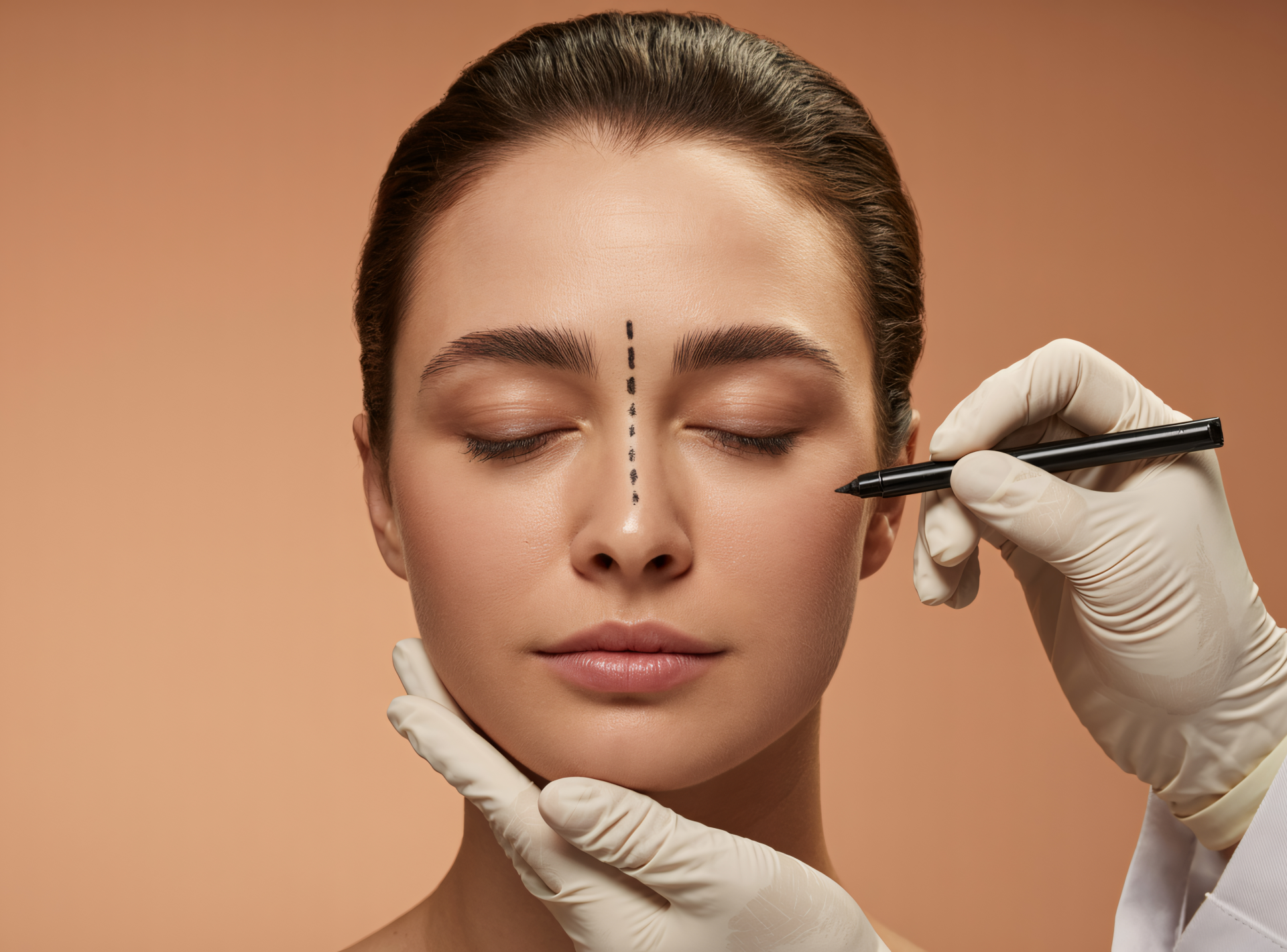
Nose Reshaping in Dubai is a cosmetic procedure designed to reshape and refine the nose while maintaining harmony with the overall facial structure. People naturally have different nose shapes, such as straight, curved, bulbous, wide, or narrow nasal profiles. Rhinoplasty allows surgeons to adjust the bridge, tip, or nostrils to improve balance and proportion. With modern surgical techniques and personalized planning, patients can achieve natural-looking enhancements that complement their unique facial features.
Our Surgeon’s Insight
Dr. Perfect Celebrity, our Rhinoplasty expert and Consultant ENT surgeon, talks about the types of noses he sees the most and the Rhinoplasty treatments he does to fix the most common problems people have.
The Perfect Doctors Clinic has a staff of hand-picked rhinoplasty surgeons that are some of the best in the UAE. From our award-winning facility in Dubai, they are committed to giving patients the best care and results possible.
What Causes Different Shape Noses?
Genetics are the main thing that affects nose kinds, but there are also other things that make different sorts of noses.
Here are some important things that affect the wide range of nose shapes:
Genetics
- Most of the time, people get their nose forms from their parents.
- These genetic factors affect the size, length, and shape of the nose as a whole.
- Family factors often affect the shape of the nose that is seen in different generations.
Ageing
- As we become older, our noses and other facial features alter.
- Cartilage can become less flexible, which can change the form and structure of the nose.
- Over time, loose skin can change the way the nose looks.
Trauma
- Accidents or traumas to the body can change the contour of the nose.
- Visible alterations can happen when the nasal structure is broken, dislocated, or damaged.
- Injuries to the nose throughout childhood or adolescence may have an impact on its growth over time.
Health Conditions
- Some health problems can cause changes in the shape of the nose.
- Conditions that damage the skin, cartilage, or nasal passages can change how the whole body looks.
- Rhinophyma, a skin condition associated with rosacea, may result in a bulbous nose.
Environmental Factors
- Pollution and allergies are two examples of environmental factors that might impact nasal health.
- Allergies and other long-term diseases can affect the nasal airways and change how the nose looks.
Cultural and Regional Influences
- Different cultures may have different ideas on what nose shapes are best or what they like.
- Different populations can have different nose forms because the genetic traits that make up a region are different.
Hormonal Changes
- Changes in hormones, especially during puberty and pregnancy, can change the shape of the nose and other parts of the face.
- Changes in hormone levels may affect how the tissues of the nose grow and mature.
Some Of The Most Common Nose Shapes
Roman Nose
- Alternate Name: Also known as Straight Nose.
- Characteristics: A straight, prominent bridge, a slightly bent look, and a powerful, defined profile. About 10% of people have a nose like the Romans.
- Celebrities: Ryan Gosling, Jennifer Aniston, and Kate Middleton are some famous people.
Button Nose
- Alternate Name: Also known as Dainty Nose.
- Characteristics: Small with a tip that points up a little.
- Celebrities: Katie Holmes, Reese Witherspoon, and Kate Bosworth.
Greek Nose
- Alternate Name: Also known as Straight Nose
- Characteristics: A bridge that is very straight and has no curves or humps, which is a sign of classic elegance. About 4% of people have noses that look Greek.
- Celebrities: Jennifer Aniston and Kate Middleton.
Turned-Up Nose
- Alternate Name: Celestial Nose.
- Characteristics: Small with a tiny dent in the bridge and a tip that sticks out, giving it a youthful look. About 15% of people have a nose that turns up.
- Celebrities: Carey Mulligan and Emma Stone.
Fleshy Nose
- Alternate Name: Einstein Nose
- Characteristics: Fuller and rounder shape, weak cartilage, fleshy tip that points down, and makes facial features look softer. More than 25% of people in the world have a fleshy nose, according to statistics.
- Celebrities: Tom Hardy and Barbra Streisand are famous people.
Nubian Nose
- Alternate Name: Also known as Wide Nose
- Characteristics: Wide and long, with a longer bridge and a wide base. The tip is a little lower than the rest of the nose, and the nostrils are wider.
- Celebrities: Gabrielle Union and Beyoncé.
Crooked Nose
- Alternate Name: Also known as a “deviated nose.”
- Characteristics: Bends or twists that are easy to see and are caused by genetics or injuries.
- Celebrities: Owen Wilson.
Long Nose
- Characteristics: Long, straight, or slightly curled, it gives the face a classy look.
- Celebrities: Adrien Brody.
Bulbous Nose
- Characteristics: A big mass or swelling on the lower part, which is a sign of rhinophyma. A bulbous nose is present in fewer than 0.6% of individuals.
- Celebrities: Bill Clinton.
Snub Nose
- Alternate Name: Mirren Nose is another name for it.
- Characteristics: Small and a little spherical, with a slight upward slope at the tip. About 6% of persons have a nose that is snubbed.
- Celebrities: Helen Mirren.
Hawk Nose
- Alternate Name: Aquiline Nose, Beak Nose
- Characteristics: A dramatic curving shape, a noticeable bridge, and a shape that looks like a hawk’s curled beak. A hawk nose is present in about 5% of individuals.
- Celebrities: Adrien Brody and Daniel Radcliffe.
Bumpy Nose
- Characteristics: An uneven shape and a curve that is either faint or obvious in the dip. About 9.5% of persons have a nose that is not smooth.
- Celebrities: Barbra Streisand.
East Asian Nose
- Characteristics: Slim, flat shape with a shorter tip, which is popular in East Asia.
- Celebrities: Lucy Liu.
Nixon Nose
- Characteristics: A straight bridge that curves at the end into a wider point is very rare and happens in less than 1.5% of the population.
- Celebrities: Richard Nixon.
Combo Nose
- Characteristics: This nose shape has features from other sorts of noses that come together to provide a form that doesn’t really fit into any one category.
It’s crucial to remember that every nose is different and sculpted by a mix of genes, the environment, and personal experiences. Understanding this intricacy lets you appreciate the distinctive features of your nose and, if you want, look into ways to change it that work with the many varieties of noses.
BOOK AN APPOINTMENT TODAY
Can Your Nose Shape Be Changed?
Yes, there are five basic types of surgery that can change the form of your nose.
Septoplasty
- It is mostly a functional operation to fix problems with the nasal septum, like a deviated septum.
- It requires cutting into the nose to get to the septum. Then the surgeon straightens or moves the cartilage and bone to make it easier for air to flow.
Turbinate Reduction (Turbinoplasty)
- A functional procedure that aims to fix enlarged turbinates, which can block nasal airways.
- It entails diminishing the dimensions of the nasal turbinates, generally through the excision or realignment of soft tissues to relieve nasal obstruction and enhance respiration.
Rhinoplasty
- Primarily a cosmetic operation to make the nose seem better or fix functional problems.
- This treatment changes the bone, cartilage, and soft tissues of the nose to make it seem better. This could mean changing the bridge of the nose, fine-tuning the tip, or moving the nostrils.
Types Of Rhinoplasty
Reduction Rhinoplasty
Focuses on making the nose smaller overall or in certain areas, which helps with symmetry and proportions.
Augmentation Rhinoplasty
The goal is to change the shape or size of the nose, usually by utilizing implants, grafts, or filler injections to add volume and shape.
Post-Trauma Rhinoplasty
Fixes and restores the contour of the nose after an injury or trauma, fixing both aesthetic and functional problems.
Revision/Corrective Rhinoplasty
Fixes or changes problems from a previous rhinoplasty to make sure the best outcomes and deal with any problems or unhappiness.
Reconstructive Rhinoplasty
Necessary for those who were born with abnormalities, have serious traumas, or need a lot of nose reconstruction for medical reasons.
Refinement Rhinoplasty
Focuses on little adjustments to make the nose look better overall, frequently fixing small flaws or asymmetries.
If you’re a man thinking about getting rhinoplasty, your main goal may be to make your face look more manly. Common goals are to improve the shape of the nasal bridge, fix a big dorsal hump, and make sure the nose is in the right proportion to the rest of the face.
It focuses on keeping a powerful and well-balanced profile while keeping and improving the unique features of men’s faces. You can talk to our experienced facial plastic surgeons about your goals and find out which form of rhinoplasty is best for you.
Alarplasty
- This procedure changes the shape of the alar or nostrils of the nose.
- To remove extra tissue or change the form of the alar, cuts are made near the base of the nostrils. People commonly have this surgery to fix large nostrils or unevenness.
Nasal Tip Surgery (Tip Rhinoplasty)
- Focus on the tip of the nose to improve its shape and look.
- Tip rhinoplasty changes the cartilage and tissues near the end of the nose. To get a more balanced and attractive appearance, surgeons can change the projection, rotation, or definition of the tip of the nose.
Depending on the patient’s specific goals and concerns, these operations can be done alone or in groups. The outcomes of rhinoplasty can also be different before and after, depending on the type of nose you have and the method you choose.
To find out which operation is best for you, it’s necessary to talk to our certified and experienced facial plastic surgeon.
MEET THE EXPERT DOCTOR
What Are The Common Abnormalities Influencing Different Shape Noses?
Nose problems can have a big effect on how the nose looks and how it is built. Some common problems are:
- Congenital Deformities: These abnormalities are present at birth and can include things like cleft palates or weak parts of the nose.
- Enlarged Adenoids: Swollen lymph glands in the back of the nose can make it hard to breathe and, in severe cases, cause sleep apnea.
- Enlarged Turbinates: If these structures in the nostrils swell, they might make it hard to breathe normally.
- Deviated Septum: A wall of cartilage that is twisted or misshapen between the nostrils, making it hard to breathe.
- Saddle Nose: A flat or concave bridge that happens a lot after an injury, illness, or drug usage.
- Ageing Nose: As the sides of the nose collapse with age, they can block the nostrils and make the nose look droopy.
How Do Nose Abnormalities Impact Nose Shape?
Nose anomalies can change the shape and look of the nose, making it hard to breathe, smell, and other things. People with nose difficulties may snore, get nosebleeds, have a dry mouth, or have sinus issues.
A rhinoplasty changes the curve of the nose to make it look better and more balanced. Most of the time, people get nose jobs for cosmetic reasons. However, they can also be done to improve function by fixing breathing problems and making sleep apnea and snoring less severe. When this happens, the septum or turbinate is generally operated on since the airway is closed. This is called a septoplasty or submucosal resection (SM Resection).
Frequently Asked Questions
Which Kinds Of Noses Are The Most Common?
The most prevalent types of noses are bumpy, fleshy, and straight. Nevertheless, this can differ among various global populations.
What Is The Most Popular Nose Shape?
One of the most common nose shapes that patients request when having nose surgery is the upturned nose. When talking about nose surgeries, people also often request a straight nose.
Which Nose Shape Is Most Common For Rhinoplasty Surgery?
Since rhinoplasty surgery can alter the structure and shape of your nose regardless of your starting point, it is common for all nose shapes.
Best Plastic Surgeon In Dubai For Nose Reshaping
Best Plastic Surgeon in Dubai for Nose Reshaping focuses on understanding the natural variations in nose shapes before recommending any surgical approach. During consultation, Dr. Perfect Celebrity carefully evaluates nasal anatomy, facial proportions, and patient expectations to design a customized treatment plan. The goal is to refine the nose while preserving a natural appearance that suits the patient’s face. With advanced techniques and attentive aftercare, patients can achieve balanced nasal contours and improved facial harmony.
Conclusion
Knowing the shape of your nose and what changes could be possible might help you make smart choices. Different nose forms are what make us distinctive, whether you choose to have surgery or love how you look.