





Facelift Surgery in Dubai
Facelift Surgery at Perfect Doctors Clinic
Your Facelift Surgeon in Jumeirah
- Your facelift is planned and performed by a DHA-licensed plastic surgeon in Dubai, with techniques chosen for natural-looking results in women and men.
- Your consultation and aftercare take place at our clinic on Al Wasl Road in Jumeirah, and the operation in a DHA-licensed hospital.
DR. DIRK KREMER BEST FACELIFT SURGEON IN DUBAI UAE
Watch on Youtube Video Dr. Dirk Kremer the best Surgeon in Dubai UAE
OUR FACELIFT PATIENT OUTSTANDING RESULTS
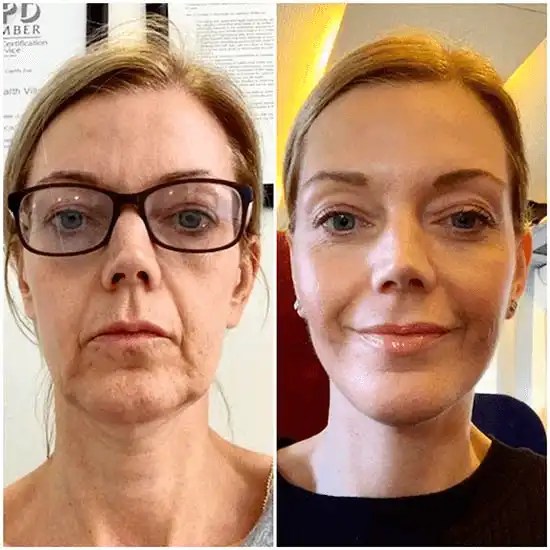


Looking to enhance your appearance? Trust the expertise of Facelift in Dubai by top plastic surgeons for a remarkable face lift transformation.
FACELIFT IN DUBAI
Facelift surgery in Dubai is a cosmetic surgical procedure to help you achieve these results and benefits:
- Tightening sagging skin and facial muscles
- Face lift Enhancing and skin lifting your facial contours
- Addressing premature wrinkles and lift the skin
- Skin lift the lower two-thirds of the face
- Smoothing creases and fine lines
YOUR FACELIFT PROCEDURE IN DUBAI
Some of the quick facts about your Facelift procedure in Dubai are:
- Type Of Procedure: Surgical Procedure
- Surgery Length: 2 Hours
- Recovery period: 1-2 Weeks
- Anesthesia: Sedation/General Anesthesia
WHAT IS FACELIFT SURGERY?

Facelift is a surgical treatment to restore a more youthful facial appearance by lifting the face, jawline, and neck. The best plastic cosmetic surgeons for facelift surgery in Dubai offer surgical facelift results to young and older men and women.
Facelift in Dubai is a cosmetic plastic surgery offered to reverse the signs of aging, other skin treatments could be done later in conjunction with this facial procedure at a low-cost price. The specialists use the best non-surgical face rejuvenation treatments, including fillers, muscle relaxing injections, and PRP.
Correcting this facial drooping and wrinkling is the goal of a facelift. The different techniques that may be used to perform a Facelift include the traditional method, whereby the incision starts within the hairline at the temples, then continues down to just in front of the ears, ending behind the ears, again in the hairline, or the limited technique, where a shorter incision is made starting above the ear in the hairline and coming around to the front of the ear. The patient's skin type, the degree of facial drooping, and the intended outcomes will all influence which procedure is used.
FACELIFT BEFORE AND AFTER IMAGES
Check out top satisfied patients photos, and best results for before and after Facelift surgery images in Jumeirah, Dubai. The money, effort, and time you put into this procedure are surely worth it.


*Booking a Clinic Facelift surgery appointment for International visitors or UAE citizens coming from Al Ain and Sharjah can be done by phone at +97146112000.
(USA American UK and European safety standards) for Facelift surgery Booking with the best plastic cosmetic surgeons for female and male patients
AM I A GOOD CANDIDATE FOR FACELIFT SURGERY?
Any man and woman could be a good candidate for Facelift surgery in Dubai as long as they:
- Have mid-to-severe aging effects
- Have sagging cheeks, fatty jowls and deep smile lines
- Are physically fit and healthy.
- Don’t smoke or drink alcohol.
TYPES OF FACELIFT RHYTIDECTOMY
There are a few kinds of facelift surgeries, but here are the 4 most common facelift types to consider:
Deep Plane/SMAS Facelift (SMAS Rhytidectomy)
By tightening and strengthening the weak muscles in that area of the face, a deep-plane facelift or SMAS Rhytidectomy aims to remove the appearance of sagging skin around the chin and neck. During a deep plane facelift, the surgeon makes incisions below the musculo-aponeurotic system (SMAS). The SMAS layer, which is under the skin near the muscles used for frowning and smiling, can be repositioned, reshaped, and smoothed out by your surgeon to reduce wrinkles and give you a more youthful, radiant appearance.
Mini Facelift (Mini Rhytidectomy)
Small, discrete incisions are made beneath the hairline during this surgical Mini facelift procedure to allow your surgeon to expertly remove extra tissue and tighten and smooth out your skin. A mini Rhytidectomy can usually be used to minimize or completely remove the appearance of jowls. The lower portion of your cheeks and mouth are typically where jowls form because, as you age, your body produces less collagen.
Mid-Facelift (Mid Rhytidectomy)
The mid-facelift, as its name suggests, focuses on the center of the face, especially the cheeks. However, implants aren't inserted into the cheeks to fill them up like cheek implants are. Instead, to lift up the cheeks, stop sagging, and get rid of fine lines and wrinkles, your face plastic surgeon will either remove more tissue or use the tissue that already exists. Those without marionette lines or jowls are excellent candidates for a mid Rhytidectomy. Nevertheless, it can also be done in tandem with jowl and marionette line removal operations.
Liquid Facelift (Liquid Rhytidectomy)
Liquid facelift is the most common kind of facial rejuvenation procedure performed. A liquid Rhytidectomy, which is well-known for its ease of use, speed, and lack of invasiveness, involves injecting an injectable serum—like Juvederm, Botox, Restylane, or Dysport—into the affected area of your face. Measured amounts of hyaluronic acid, or collagen, which increase skin suppleness and encourage collagen formation, are typically found in these serums.
Perfect Doctors Clinic Surgeon offers several versions of Facelift and based on your specific needs, goals, and preferences he will deliver the best Facelift technique that will give you the optimal result.
WHY CHOOSE PERFECT DOCTORS CLINIC SURGEON FOR YOUR FACELIFT IN DUBAI?
You can choose Perfect Doctors Clinic for your Facelift in Dubai as your destination for the best cosmetic surgeon for the following reasons:
- Perfect Doctors clinic Surgeon is one of Dubai’s most experienced plastic surgeons, if not the best Facelift plastic surgeon in Dubai. He has an outstanding body of work for facial reshaping surgeries, including Facelift in Dubai. His patients’ results and satisfaction levels are unparalleled.
- Each year, our Perfect Doctors aesthetic surgeon performs more than 150 Facelift procedures at the best hospital in Jumeirah.
- Perfect Doctors Aesthetic Clinic goal is to provide patients with FDA approved products and technologies, matter of fact, Facelifts are performed only by board-certified Surgeons accredited by DHA dubai health authority
MORE AMAZING PATIENTS RESULTS


FACELIFT RELATED OR COMBINED FACE & NECK POPULAR PROCEDURES LIST
NECK LIFT
BLEPHAROPLASTY - Eyelid Lift
BROW LIFT
LIP LIFT
OTOPLASTSY - EAR SURGERY
FACIAL RECONSTRUCTIVE SURGERY
DOUBLE CHIN REMOVAL
BUCCAL FAT REMOVAL
EYE BAG REMOVAL
FACIAL IMPLANTS
CHIN AUGMENTATION
CHEEK AUGMENTATION
SCAR REMOVAL
SCAR REVISION
FACELIFT RELATED OR COMBINED BODY POPULAR PROCEDURES LIST
LIPOSUCTION
BRAZILIAN BUTT LIFT - BBL
VASER LIPOSUCTION
TUMMY TUCK
MOMMY MAKEOVER
BODY CONTOURING - BODY SCULPTING
THIGH LIFT - THIGHPLASTY
BODY LIFT
ARM LIFT - BRACHIOPLASTY
RIB REMODELING
FAT TRANSFER
LABIAPLASTY - VUVAL SURGERY
FACELIFT RELATED OR COMBINED BREAST POPULAR PROCEDURES LIST
BREAST AUGMENTATION
BREAST LIFT
BREAST REDUCTION
BREAST RECONSTRUCTION
INVERTED NIPPLE CORRECTION
FACELIFT RELATED OR COMBINED NOSE POPULAR PROCEDURES LIST
RHINOPLASTY - NOSE RESHAPING SURGERY
SEPTOPLASTY - SEPTAL RECONSTRUCTION
FACELIFT RELATED OR COMBINED MALE POPULAR PROCEDURES LIST
GYNECOMASTIA - MALE BREAST REDUCTION

FACELIFT SURGERY FAQ
WHAT IS FACE LIFT IN DUBAI?
Face Lift in Dubai is a surgical cosmetic skin lift technique now used for aesthetic purposes to give your face a mini lift by minimizing the visible signs of sagging on the jawline and cheeks. The facelift procedure lifts and tightens a patient’s deep facial tissues, making them look and feel younger. This procedure refreshes, tightens, and rejuvenates the appearance behind the ear.
At Perfect Doctors Clinic, a top-tier, highly skilled panel of doctors performs face lift surgery. We assume that each patient will receive excellent service and results by utilizing cutting-edge medical equipment and high-quality applicators. This makes us the best choice for facelifts in Dubai!
HOW SHOULD I PREPARE FOR FACELIFT SURGERY?
Before your facelift, you should be prepared for a consultation and ready to follow pre-surgery instructions. Depending on whether your procedure will be done under local or general anesthesia, facelift surgery may be conducted as an outpatient procedure, but it may also necessitate an overnight stay. If difficulties arise, which is improbable, outpatients could need to stay overnight, and inpatients might need to stay longer if the attending surgeon recommends it. We advise you to make appropriate plans before coming in for your surgery. Prior to the treatment, you need to take the following crucial steps:
- Talk to your consultant about any vitamins and medications you use on a regular basis to determine whether you should stop taking them before surgery and, if so, for how long. For instance, you must fully cease taking any drugs or vitamins, such as vitamin E, that affect your body’s capacity to clot blood before surgery.
- Smokers should give up at least two months before surgery since it affects the effectiveness of blood flow to the skin, which can raise the risk of problems and prevent the best possible outcome.
- You should be in the best physical condition possible to ensure the best outcome; you should also be at a stable weight. Before surgery, make sure you follow a healthy, balanced diet.
You will receive comprehensive guidance from our surgeon and patient counselor regarding what to do to ensure your comfort and readiness for surgery and afterward.
WHAT TO EXPECT DURING CONSULTATION
Call us to schedule an appointment as soon as you’ve chosen to move forward with getting a facelift and are certain of your motivations. The skilled surgeon who will conduct the procedure will consult with you on the scheduled day. You ought to anticipate the following throughout the consultation:
- Talk about your reasons for choosing a facelift and your objectives for the operation. Recognizing your medical background Assessing your current state of health The choices you have for your operation.
- An assessment of the area that has to be treated, measurements (if applicable), and sometimes pictures to capture the region’s appearance before the process is carried out
- Details of the available options, the procedures to be followed, the dangers, the future course of therapy, and any potential difficulties
WHAT CAN I EXPECT FROM FACELIFT MEDICAL CENTER?
You may expect the following from Facelift medical center:
The incision is made in front of the ear, behind the ear, to the ear lobe, and finally behind the temporal region’s hairline during a facelift. The skin of the face is mobilized from this area. Excess skin is removed after the underlying tissue has been tightened and then loosened. Your face will appear significantly younger after the skin is closed. In cases where cheeks and nasolabial folds are significantly sunken, a significant midface lift might be required. A patient only needs a superficial facelift in many situations.
Because males typically have shorter haircuts and lighter hair growth, it is very necessary to optimize the placement of the cuts to ensure that the scars remain as undetectable as possible. We will run the cut “in front of the ear” and partially hidden behind the tragus, which is the ear cartilage, using my approach.
You can get a little micro-facelift if your neck wrinkles are not too noticeable. The cheeks are elevated once again to remove extra skin after the incision, which is made directly in front of the ear. Compared to a full, substantial facelift, there is notably less edema following a micro facelift.
Tumor-suction Liposuction is the technique used to transfer fat from other parts of your body to the affected location. Since this process is painless, you won’t experience any discomfort. The effects are instantaneous and natural because only pure fat cells are used.
FACELIFT SURGERY RECOVERY
If you have a traditional facelift, you will need to stay in the hospital after the treatment so that you can be closely watched while the effects of the general anesthesia wear off. The surgeon will wrap your face in a compression bandage to support your facial tissues and muscles after the procedure and keep your incisions sterile. In addition, the surgeon will place drains behind your ears in order to eliminate extra fluid and blood. Depending on your needs, drains may be removed before you go home from the hospital, or they may be left in place for a few days. After a week, you will be asked to come back for a follow-up session so that the wounds may be assessed for healing and any necessary sutures or drains can be taken out.
After receiving recuperation instructions from the medical staff, you might be able to go home the same day of your limited access. You will need to see your surgeon on a frequent basis after being released from the hospital to discuss wound care and how well you are recovering. It’s completely natural to feel some numbness and stiffness in your muscles; these sensations will pass as you heal.
- It takes around two weeks to recover, and during that period, you should refrain from washing your hair and applying makeup.
- After three weeks of avoiding direct sun exposure on the incision, you should wear a hat or high-factor sunscreen.
- Hair should not be exposed to any harsh chemical treatments, such as coloring or bleaching, perms, or chemical straightening, for a minimum of six weeks.
Under the consultant’s guidance, most patients are able to begin exercising after six to eight weeks.
HOW LONG WILL FACELIFT SURGERY RESULTS LAST?
Your facelift results could last for about ten years. Though the surgery doesn’t stop the normal aging process, your face lift might help reverse the effects of time that are obvious. You should maintain a balanced diet, quit smoking, practice proper skincare, limit your exposure to the sun, and lead a healthy lifestyle in order to prolong the appearance of your results.
A facelift procedure can significantly alter a person’s appearance by tightening, elevating, and removing creases and folds from the skin, giving the appearance of younger skin. After your operation, you will see an instant change in the contours of your face, and the full effects will become visible in as little as eight weeks.
HOW MUCH DOES FACELIFT SURGERY COST IN DUBAI?
The average male and female cost of Facelift surgery in Dubai ranges from AED 34,099 to AED 45,000 in Jumeirah clinic. You should be wary of plastic surgeons, aesthetic surgery clinics, and hospitals with discounts, cheap offers, and very low-cost Facelift surgery without expertise.
Facelift cost in dubai vary depending on the medical center treatment complexity, the surgeon’s expertise and the clinic location. Thus, a consultation in the clinic is needed with your doctor for an exact price.
DOES INSURANCE PAY FOR A FACELIFT SURGERY?
Usually, health insurance coverage does not include the cost of Facelift plastic surgery. Most health insurance providers do not include it in their policies because it is considered optional.
BENEFITS OF FACELIFT TREATMENT
Some of the key benefits of Facelift Treatment is:
- Facelifts address many signs of aging in one step.
- A facelift will help eliminate the double chin.
- A facelift can remove your jowls.
- Tighten up sagging facial skin.
- Facelifts can reduce deep wrinkles.
- Facelifts are not only for women.
- There is no right age to have a facelift.
- Facelift procedures complement other cosmetic procedures nicely.
- Invisible surgical scars and natural-looking results.
MEDICAL TOURISM FOR FACELIFT SURGERY IN DUBAI
Call to the clinic! Patients don’t need extra costs from any healthcare Medical tourism agency for Facelift Surgery in Dubai. Save money and book your cosmetic surgery package directly.
FACELIFT ADVANCED TECHNIQUES EQUIPMENTS MACHINES TOOLS AND DEVICES
Perfect Doctors Clinic offers approved new advanced Facelift techniques combined with the best Facelift advanced plastic surgery equipments, modern machines tools and devices for all the patient surgical and non surgical procedures to comply with any certified new approved advance american usa Facelift FDA (food and drug administration) and DHA (dubai health authority) rules and regulations.
How do I book a consultation for facelift at Perfect Doctors Clinic?
Call us on +971 4 611 2000, send a WhatsApp message to +971 50 190 3845 or email concierge@perfectdrs.com, and we will find a time that suits you.