





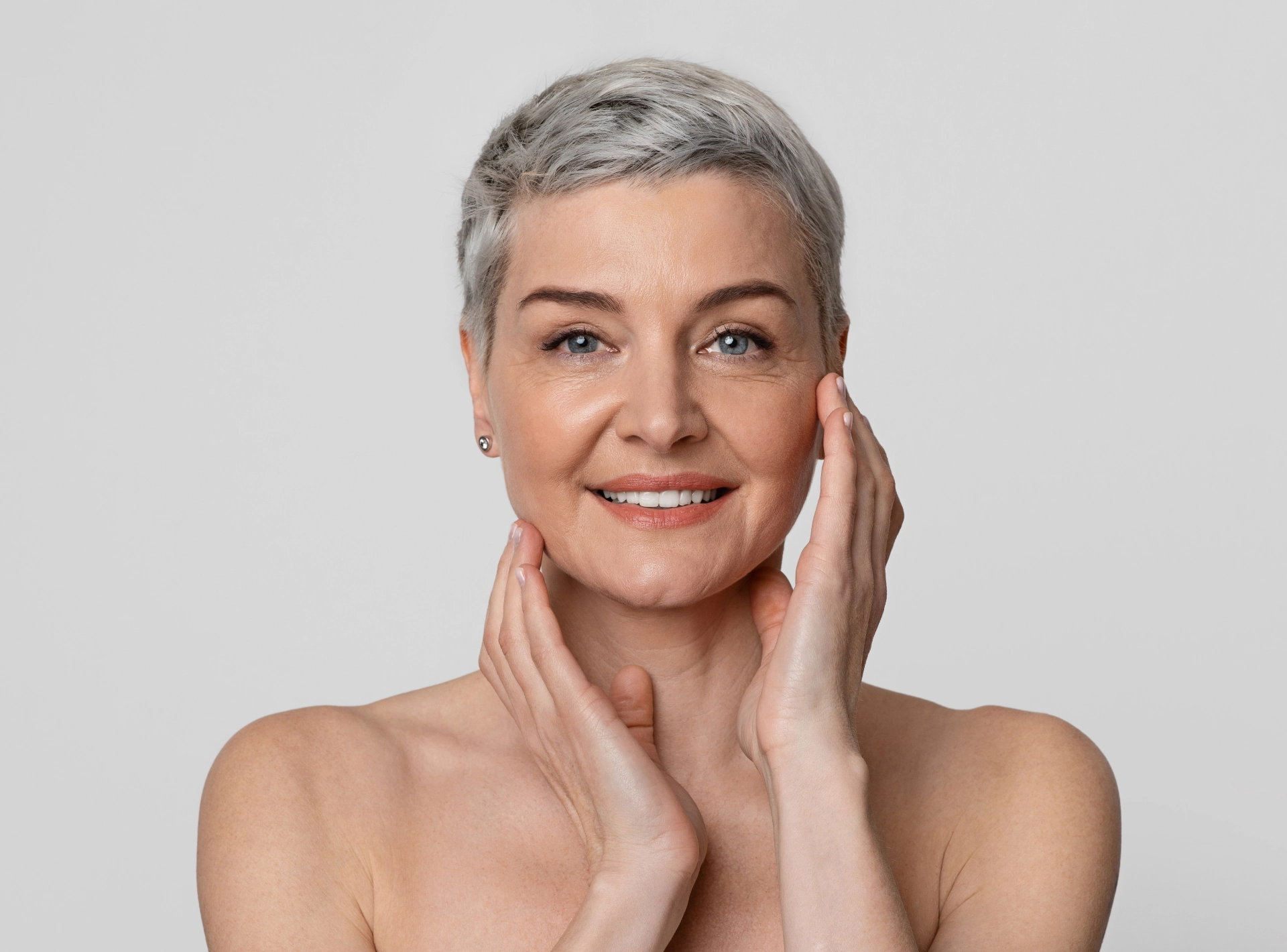
You might think that people in their sixties and seventies who have deeply etched wrinkles and sagging facial skin are the only ones who should get a facelift. While many older people can benefit from a facelift, they are not the only ones. The improvements a facelift can make are now more subtle and natural-looking thanks to advancements in surgical techniques. Facelifts have gained popularity among younger people as a result of these advancements. According to a report from the American Society of Plastic Surgeons, surgeons performed over 53,000 facelifts on patients aged 21 to 55 in 2025.
Facelift In Dubai
Facelift in Dubai is a popular cosmetic procedure for people who want to address visible signs of facial aging without waiting until later in life. Numerous individuals opt for this treatment when they observe deep facial folds, reduced facial definition, or loose skin that undermines their self-assurance. A facelift can preserve the natural expressions of the face while restoring a more youthful, smoother, and firmer appearance. The optimal time for treatment is contingent upon the skin’s condition, facial structure, and personal aesthetic objectives, rather than age alone. Early intervention may result in subtle enhancements and the preservation of youthful facial contours for an extended period. Each treatment plan is customized following a comprehensive consultation to guarantee the most appropriate approach. Patients can achieve results that are balanced, refreshed, and natural-looking, which complement their unique facial features and increase their overall confidence, through the use of advanced surgical techniques and expert care.
The Benefits Of Having A Facelift At A Younger Age
Your body is under a lot of stress and strain while recovering from surgery, but you will heal more quickly if you are younger. Fewer changes during a facelift at a younger age also contribute to a quicker and simpler recovery. Early correction of facial sagging and skin laxity may involve smaller incisions and less lifting and tightening.
But one important advantage of getting a facelift earlier is that it can make you look better. The muscles and tissue of the face are lifted, smoothed, tightened, and resculpted from below using modern facelift techniques. People might not realize you had surgery if you combine those “hidden” changes with the removal of extra skin to correct sagging and loosening.
The same advancements in facelift techniques allow for more customization and finer adjustments, which are necessary to make minor adjustments in the early stages of facial aging. A facelift at age 59 or 69 may aim to make you appear 19 years younger, but at age 44 or 51, the goal is more likely to be five or ten years younger. The majority of younger patients don’t want to drastically alter their appearance, and modern facelift methods offer the accuracy and adaptability to achieve those outcomes.
Cost is another reason to think about getting a facelift when you’re in your thirties, forties, or fifties. You’re spending money on recurring procedures that you might not require after a facelift if you’re depending on Botox, filler injections, or other non-surgical procedures to keep your appearance youthful. It might not be a wise use of your money if those non-surgical procedures are no longer producing the revitalizing effects you desire. Naturally, a facelift costs more than any injectable, but its results last for years and are far more satisfying.
For a facelift, there is no “right” age. You have a distinct aging timeline. In your thirties, you may start to develop jowls, hanging skin, or facial creases, or you may be among the fortunate individuals whose facial skin stays resilient and smooth into your sixties. Your ideal appearance and the age of your face will determine when you should get a facelift. If the face you see in the mirror looks older than you feel, a facelift may be worth considering.
BOOK AN APPOINTMENT TODAY
When It May Be Too Early Or Not The Right Moment
Not all concerns can be resolved through surgery. Anatomy is not the sole factor in determining timing.
The patients for whom I typically advise waiting are as follows:
- When the primary concerns are fine lines, pigmentation, or texture, minimal laxity is required. These are responsive to skincare and non-surgical care, rather than facelift surgery.
- Expectations that are influenced by filtered images rather than realistic outcomes
- Active smoking that has not been discontinued sufficiently prior to surgery
- Unstable weight or a recent significant weight loss that has not stabilized
- Uncontrolled health conditions that require initial optimization
- Surgery under consideration for reasons other than the patient’s own concerns
- Recent emotional distress that may be precipitated by an issue that surgery cannot resolve
Skin texture, sun damage, pigmentation, and fine superficial lines are not addressed by facelift surgery. These necessitate distinct methodologies, including medical skincare or resurfacing. In cases where the primary concern is volume loss without significant laxity, fillers or fat transfer may be considered as an alternative to or prior to surgery.
After the appropriate consultation, you will clearly understand which of your concerns surgery can effectively address and which require a different approach.
Frequently Asked Questions
1. Is 41 Too Young For A Facelift?
It is not a requirement; however, it is contingent upon the anatomy. Certain procedures, such as a short scar facelift, may be appropriate for patients in their forties who have genuine lower-face laxity, early jowls, or neck changes that are no longer responsive to non-surgical care. Some individuals in this decade exhibit minimal laxity and are better suited for skincare, injectables, or simply waiting. The decision is derived from the physical examination conducted during the consultation, rather than solely from the birthday.
2. Is 61 Or 71 Too Old For A Facelift?
There is no established upper age limit. Medical fitness, healing capacity, realistic expectations, and stable health conditions are the most important factors. In the seventies, patients who have well-managed health conditions are frequently considered candidates. Although the surgical planning may be more comprehensive, recovery typically takes longer, and medical clearance is more thorough, age alone does not preclude facelift surgery.
3. How Do I Know If I’m Ready For Facelift Surgery?
Consultation may be beneficial if the following conditions are present: visible jowls, jawline changes, or neck laxity at rest, non-surgical care that is no longer yielding the desired outcome, stable health and the capacity to take time off for recovery, a willingness to cease smoking if applicable, and realistic expectations. Readiness is also emotional. It is advisable to contemplate surgery only after conducting a thorough evaluation of the situation, rather than under the influence of time constraints.
4. What Signs Mean I Should Wait?
There are numerous indicators that indicate that it may be more advantageous to delay. When the primary concerns are fine lines, pigmentation, or texture, minimal laxity is required. Rather than realistic outcomes, expectations are influenced by filtered images. Recent significant weight changes that have not stabilized or active smoking. Uncontrolled health conditions that require initial optimization. Surgery was contemplated for the specific purposes of another individual. The desire for change may not be addressed by surgery in the context of recent emotional difficulties.
5. How Long Do Facelift Results Last?
In the literature, the majority of facelift results are reported to last between seven and ten years. However, the longevity of the procedure is contingent upon factors such as technique, anatomy, skin quality, sun exposure, smoking status, weight stability, and ongoing care. Results persist beyond a predetermined timeframe. The face continues to age, but it typically begins from a more favorable position. Patients who have undergone surgery previously may contemplate a subsequent procedure in the future, as the facial structure continues to evolve.
MEET THE EXPERT DOCTOR
Best Plastic Surgeon In Dubai For Facelift
Best Plastic Surgeon in Dubai for facelift is available at Perfect Doctors Clinic, where Dr. Perfect Celebrity provides personalized facial rejuvenation treatments designed to achieve elegant and natural-looking results. Every facelift commences with a thorough consultation to assess the quality of the skin, facial anatomy, aesthetic concerns, and individual expectations. The emphasis is on the distinctive facial changes and desired outcome of each patient, rather than recommending surgery based on age. Dr. Perfect Celebrity employs a combination of artistic precision and advanced surgical techniques to restore youthful facial contours while preserving natural facial expressions. The treatment plan is meticulously tailored to address loose skin, facial folds, jawline definition, and other signs of aging in a manner that is both harmonious and balanced. Patient satisfaction, safety, and comfort are prioritized at every stage of the journey. In order to guarantee a comfortable treatment experience from consultation to recovery, Perfect Doctors Clinic is outfitted with cutting-edge technology and adheres to rigorous safety protocols. The medical team is committed to providing patients with ongoing support and information, both prior to and following their surgery. The objective is to achieve youthful, revitalized outcomes that complement one’s inherent beauty without generating an artificial appearance. Dr. Perfect Celebrity and the experienced team at Perfect Doctors Clinic have earned the trust of patients in Dubai who are seeking high-quality facelift procedures. This is due to their commitment to excellence, exceptional surgical expertise, and personalized care.
Schedule A Consultation At Perfect Doctors Clinic
Make an appointment for a consultation with Dr. Perfect Celebrity right now to see if a facelift or another facial procedure would be beneficial for you. We will examine your face and neck to determine how resilient or lax your skin is, ask you questions to learn about your treatment objectives, and suggest a strategy to get the desired outcomes.